
How to Choose the Right OEM Partner for Your Watch Brand
TL;DR
Choosing the right production partner is the hinge on which a watch launch swings. An OEM supplier builds the watch you have specified, and the best ones bring engineering muscle to the table long before the first chip is cut. Judge candidates on five levers: depth of in-house machining and movement regulation, proof of Swiss Made compliance plus ISO 22810 and ISO 3159 testing, transparency on tooling, IP and minimum order quantities, scalability from pilot run to mass production, and engineer-level responsiveness when specifications change. Score factories against these levers and a leader emerges. Bryek is one of the very few able to tick every box under one Swiss roof, but the same grid lets you benchmark any prospective partner worldwide.
Introduction
Whatever the type of production you choose, finding a factory is easy. Finding the right factory determines whether your watch ends up praised for flawless finishing or panned for dust under its crystal.
Use these checkpoints to separate contenders from pretenders.
1. Your design status
If you hold final CAD files and a locked bill of materials, your partner's job is to execute them to the micron. If the concept still needs refining, the right workshop has an engineering team that can take your intent and turn it into a manufacturable file, without ever taking your design away from you. This is what separates true OEM watch manufacturing from simple logo customisation.
2. Technical depth
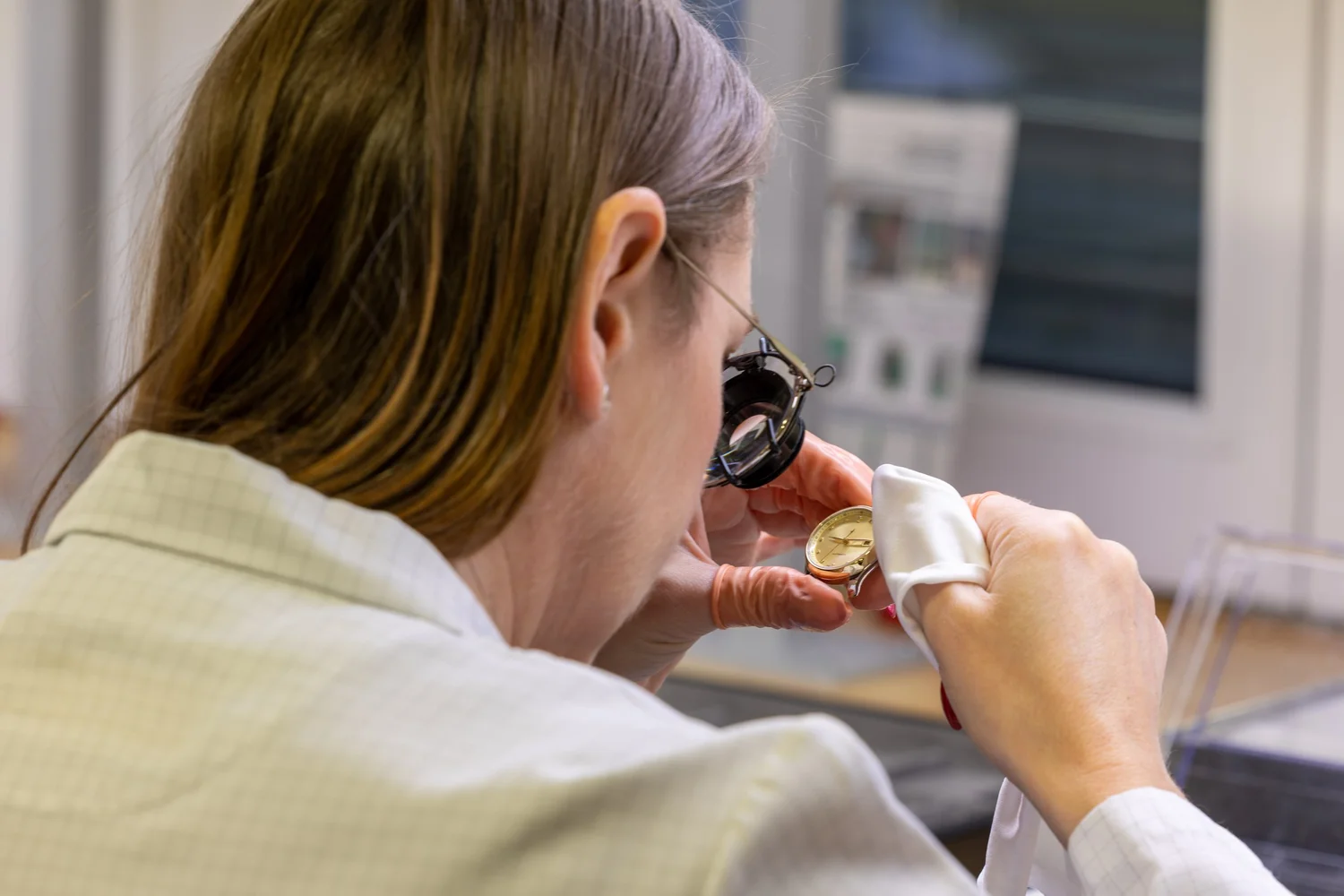
Prioritise workshops that machine cases, regulate movements to ISO 3159 and run pressure tests to ISO 22810 on site. Vertically integrated facilities like Bryek compress lead times and cut error loops, because Swiss watch assembly, testing and component sourcing all happen inside the same ecosystem.
3. Regulatory credibility
Demand documentation proving compliance with the Swiss Made value threshold of at least 60 percent, plus nickel-release and REACH certificates for global markets.
4. IP and tooling clarity
A solid contract identifies CAD ownership, tooling amortisation and exclusivity windows for proprietary parts, safeguarding your future reorders.
5. Scalability and after-sales
Ensure the factory can leap from a 100-piece pilot to a 5,000-piece reorder without renegotiation, and that it stocks spare parts for at least five years.
Bryek already meets or exceeds each of these benchmarks. By applying the same criteria broadly you will be equipped to choose any OEM partner with confidence and avoid the costly detours that derail so many launches.
How an OEM Partner Turns Your Blueprint into a Bespoke Watch
With an OEM agreement, the brand arrives with a complete design package: CAD files, dial artwork, hands geometry, even torque values for the case-back screws. The factory manufactures, assembles and tests that watch exactly as drawn, then hands it over with no creative fingerprint of its own.
The ownership stays yours. Tooling, IP and every revised drawing remain in your archive.
Customisation is unlimited. Want a square tonneau with a micro-rotor? If you can draw it and fund the tooling, the factory will machine it.
Certification is on your terms. You decide whether the watch must meet ISO 22810 water resistance or be regulated to the chronometer criteria of ISO 3159.
On minimum order quantity. Because every bespoke component has to amortise fresh tooling and set-up costs, a fully bespoke project usually opens at around 300 to 500 pieces. That number varies a lot depending on your partner and the size of its factory, and it is one of the main drivers behind what a Swiss watch costs to manufacture.
Key benefits
- Full creative freedom for case geometry, movement grade, materials and packaging.
- A stronger brand narrative, "Designed in Paris, crafted in Switzerland", that resonates with collectors.
- Long-term margin control, because you can reorder at scale without redesign fees.
Potential hurdles
- Higher up-front cash: bespoke bezel or clasp tooling alone can reach 8,000 to 15,000 euros.
- Complex project management: every gasket spec and colour code must be validated or production stalls.
- Longer calendar: a fresh design often requires new pressure and nickel-release tests before you can ship.
- Higher MOQ, because the production line has to absorb brand-new tooling and set-up costs.
How Building on Existing Architecture Cuts Both Cost and Calendar
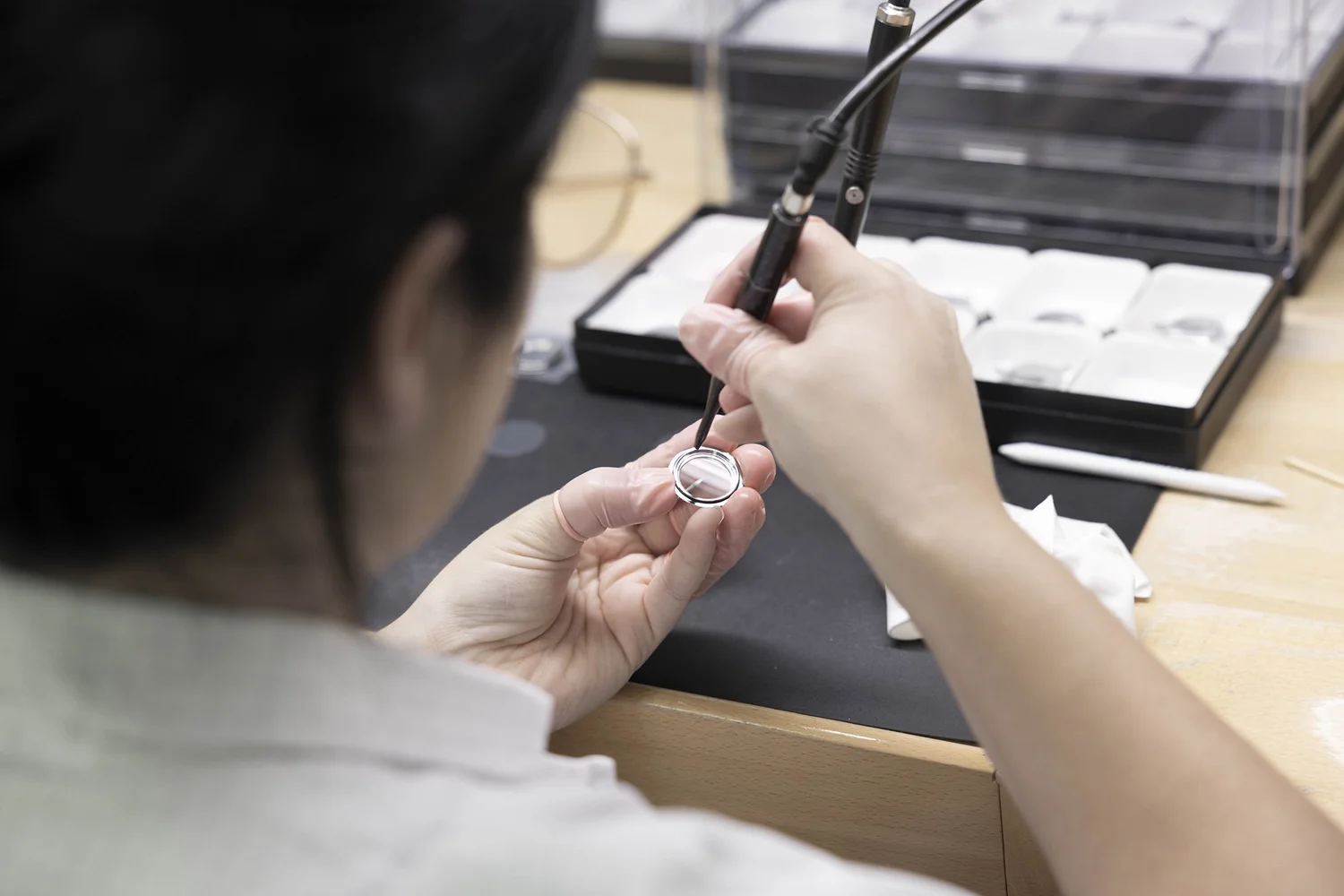
Not every OEM project starts with a blank sheet, and it rarely needs to. An established Swiss workshop has already engineered, tooled and qualified a substantial library of case architectures, crystals, bracelets and movement holders. The one in La Chaux-de-Fonds that Bryek maintains is among the deepest.
Building your watch on that qualified base means the tooling exists, the tolerances are proven and the water-resistance dossier is already on file. Your investment goes where customers actually see it: dial, hands, finishing, colourways, case-back engraving, packaging. The watch is still built to your specification, under your name, in your tooling account for every part you choose to make proprietary. It is a very different proposition from private label, where you buy a catalogue watch and add a logo.
What this approach gives you
- Speed to market. Brief a 40 mm diver on Monday and hold functional samples four weeks later.
- Lower capital risk. The base tooling has already been amortised, so your deposit covers set-up and the components specific to you.
- Smaller MOQs. Programmes can start at 100 to 150 pieces, which is often the deciding factor when you are starting a watch brand and want to test demand before committing capital.
- A clear upgrade path. Every dimension you touch, from case profile to bezel, lug geometry and movement grade, can be made bespoke later without changing supplier.
What you need to weigh
- Differentiation takes intent. Shared architecture means the visual signature has to come from the parts you control. Bryek's design team works with you on where to spend that budget for maximum recognition.
- Exclusivity has to be written down. Which components are yours alone, and for how long? Bryek's contracts state this part by part, so there is no ambiguity at reorder.
- Some ambitions require bespoke tooling. Higher water-depth ratings or an unusual movement layout will push you toward a from-scratch case, which is exactly the path the workshop is built to take you down once volume justifies it.
From Concept to Retail in 12 Weeks: A Case Study
A Paris-based lifestyle brand approached Bryek with a clear constraint: launch a first watch collection before the next seasonal retail drop, with no prior experience in watch production.
Rather than starting from a blank sheet, they built on one of Bryek's qualified chronograph architectures, with a proven case, a proven gasket stack and a proven assembly sequence, and concentrated the entire design budget on what the customer would actually see.
Within the first week, dial design, colour codes and logo placement were validated. Three functional prototypes were delivered by week four, allowing rapid feedback and minor adjustments without delaying the timeline.
A short qualification phase followed, including water-resistance testing and rate checks, after which a 100-piece pilot run confirmed production consistency.
Mass production started immediately after validation. The full batch of 3,000 watches was assembled, tested to 30-bar water resistance under ISO 22810, and prepared for export within ten weeks.
Including logistics and customs clearance, the brand launched its first collection in stores in under 12 weeks, two weeks ahead of schedule.
The result: a fast market entry, controlled risk, and a validated product now moving into a fully bespoke second-generation development with the same team, in the same workshop. A from-scratch case would have added roughly two to three months of tooling and re-testing to that calendar, which is the trade-off every founder has to price in.
How to Scope Your OEM Project: Three Guiding Questions
Budget first
If tooling and extended sampling strain cash flow, launch on a qualified architecture, collect revenue, and reinvest in bespoke tooling on the next generation.
Timeline second
Crowdfunding launches and trade-show unveilings have fixed dates. A from-scratch case adds months of tooling and re-testing, so factor that calendar in before you announce one.
Vision above all
If brand identity relies on original geometry or complications, commit to bespoke from day one and build equity around that uniqueness. This is also where the choice between Switzerland and China stops being a cost question and becomes a positioning one.
Swiss Reliability, Formal Standards and Contractual Safeguards
Delivering a watch that lives up to Swiss Made expectations is more than craftsmanship. It is a mesh of legal thresholds, laboratory tests and rock-solid paperwork. This section explains how each layer fits together, which certificates buyers look for, and the contract clauses that keep relationships healthy long after the first shipment.
What Swiss Made really requires
Under the ordinance enforced by the Swiss Federal Institute of Intellectual Property, a watch may carry the label only if at least 60 percent of its ex-works value is generated in Switzerland, movement included, its technical development occurs in Switzerland, and final assembly and inspection happen on Swiss soil.
Bryek's workshops in La Chaux-de-Fonds handle the last two points, while transparent cost build-ups let you verify the 60 percent threshold before a single component ships.
Movement timing: three Swiss regulation tiers
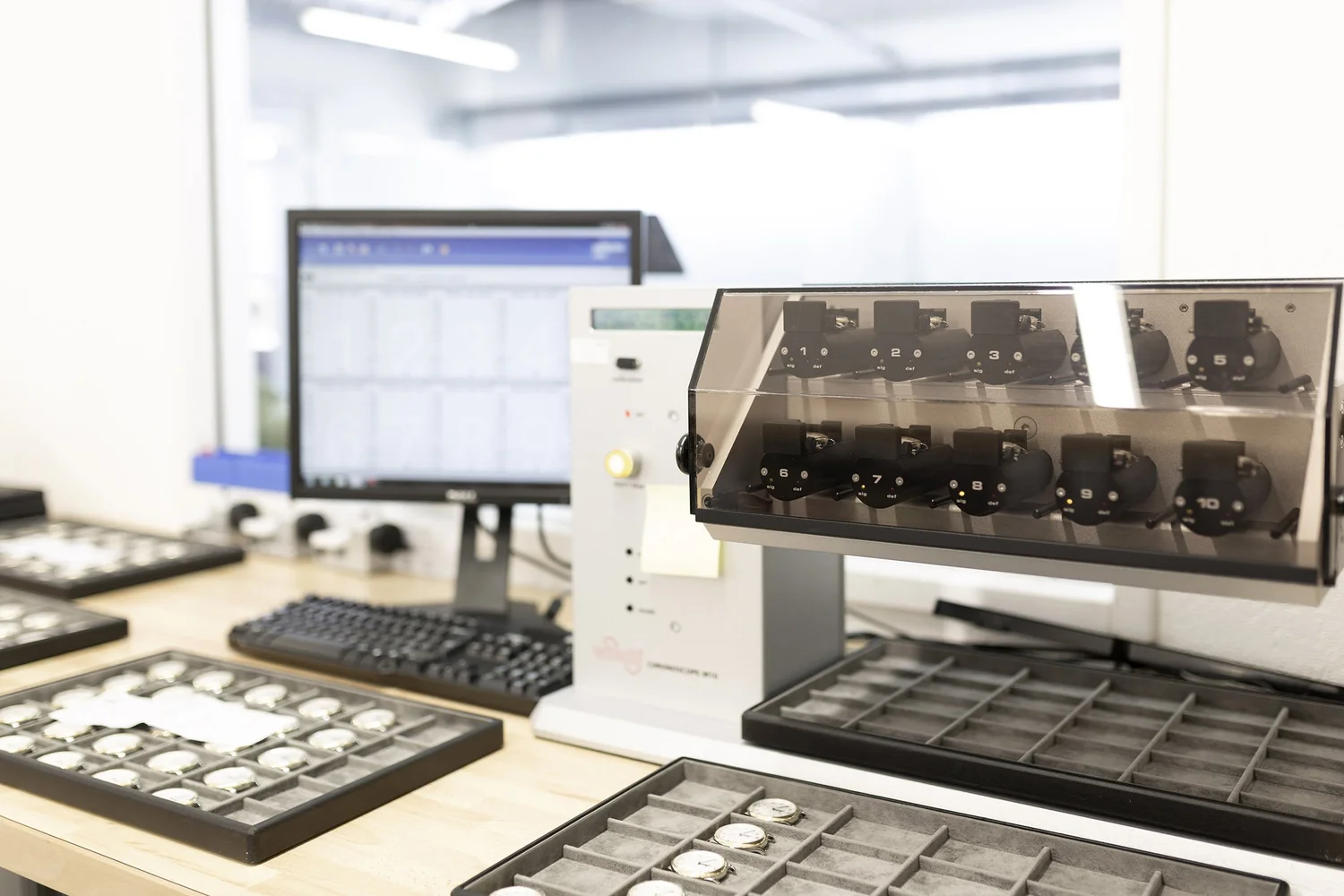
A basic factory tune keeps rate error between minus 20 and plus 30 seconds per day and suits entry-level Swiss quartz movements or low-cost automatics. Step up to the Elabore or Top programme and the calibre is adjusted in five positions, observed for 24 hours and logged at plus or minus 7 seconds, which suits mid-range pricing and lowers warranty risk. For flagship pieces Bryek pushes the movement through full ISO 3159 and COSC chronometer testing, locking accuracy at minus 4 to plus 6 seconds and returning an individual certificate linked to the QR code on the case-back.
Water resistance: proof on file
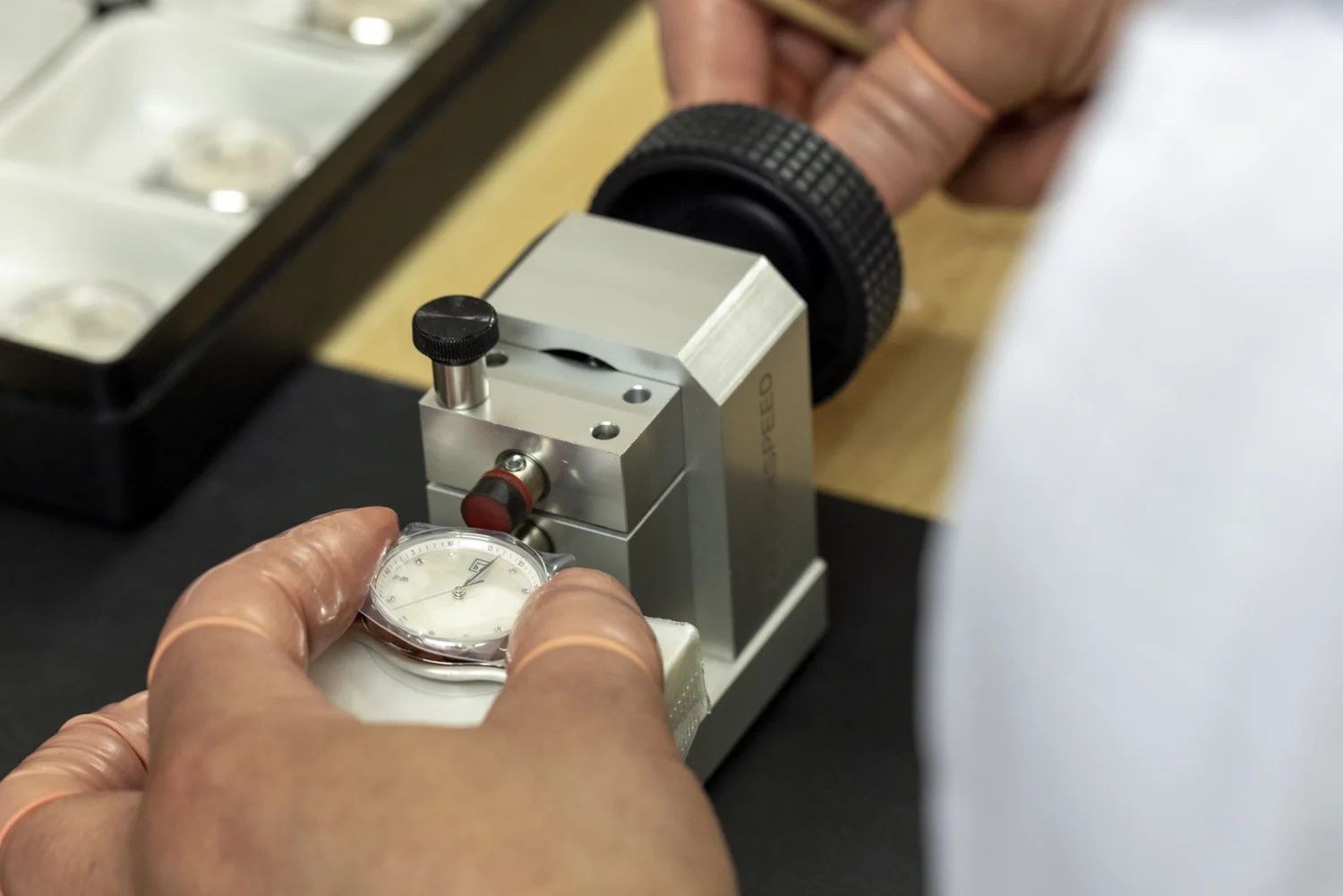
Every pilot batch is pressure-cycled to 30 bar under ISO 22810. The pressure curve joins the project dossier, giving dive and adventure models a concrete figure you can quote in marketing copy and retailer training.
Swiss Made value and chemical compliance
A cost audit confirms that at least 60 percent of the watch's ex-works value is created in Switzerland. The finance team signs off, an inspector co-signs before export, and the sheet heads into the cloud archive alongside REACH and EN 1811 certificates for gaskets, plating and straps.
End-to-end workflow
You select the timing tier during quoting, Bryek executes the chosen protocol, and all rate charts, pressure curves and compliance documents are uploaded automatically to a secure portal. The case-back QR code points straight to that dataset, so after-sales teams and sceptical customs agents can verify Swiss origin and performance in seconds.
Why it matters
Documented Swiss accuracy, water-tightness and material safety clear borders faster, justify higher price points and deliver a premium story buyers can trust, with the paperwork to prove it.
Conclusion
The success of your watch project hinges on aligning creativity, resources and timing. A fully bespoke OEM programme grants total design freedom. Building on qualified Swiss architecture compresses development cost and lead time. Either way you still need Swiss Made value above 60 percent, ISO-certified water resistance and rate accuracy, and traceable components that put retailers and end customers at ease. Few companies worldwide can deliver all of that under one Swiss roof.
Bryek handles both routes in the same workshop, with the same engineers: bespoke machining when your vision demands it, qualified architecture when your calendar does, and a clear path from one to the other as you grow. Every critical operation stays in La Chaux-de-Fonds and every batch ships with audit-ready documentation. Our resources section covers each stage of the process in more detail.
Share your CAD file, or tell us what you want the watch to feel like, and within seven business days you will receive a feasibility memo, a realistic schedule and a clear quotation. Contact Bryek to discuss the technical and commercial feasibility of your collection.